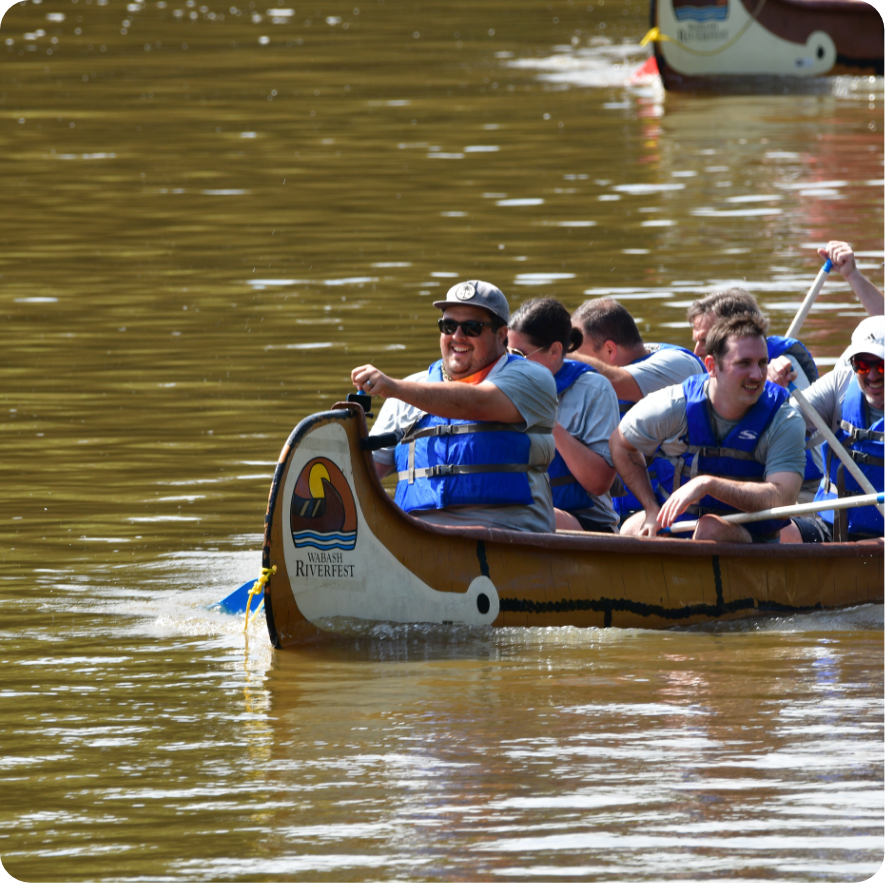
Voyageur Canoe Races

Local governments, businesses, clubs, pubs, and gyms throw down some gauntlets and challenge each other to canoe races every year at Riverfest.
Racing on the River

The Voyageur canoe races are a highlight of Wabash Riverfest. Teams of 10 sprint down the Wabash in the huge canoes. Teams can be formed with colleagues, friends, family members, churches, or clubs. Paddlers must be 10 years or older, must sign a waiver, and must wear a life jacket. We’ll have someone on hand to steer the boat and give a crash course in paddling.
Lafayette and West Lafayette have a long-standing rivalry and compete each summer to see who will take home the beaver trophy. Even if you couldn’t get a team of 10 together to fill a boat, you can sign up the day of to be in one of our open races. These races are open to anyone willing to paddle hard. See below for our race schedule.
Every person that participates in the canoe race takes home a Wabash Riverfest cotton tote bag, and winning teams get an engraved wooden canoe paddle as a trophy!
If you are interested in forming a team, contact Amanda at [email protected] for more information.
Race Schedule
(Subject to Change)
10:00 am
- BF&S
- Indiana State Chemists
10:30 am
- OPEN RACE - sign up for a spot at the fest
11:00 am
- OPEN RACE - sign up for a spot at the fest
11:30 am
- OPEN RACE - sign up for a spot at the fest
Noon: City Challenge Race
- City of Lafayette
- City of West Lafayette
12:30 pm
- OPEN RACE - sign up for a spot at the fest
1:00 pm
- OPEN RACE - sign up for a spot at the fest
1:30 pm
- OPEN RACE - sign up for a spot at the fest
2:00 pm
- OPEN RACE - sign up for a spot at the fest
2:30 pm
- OPEN RACE - sign up for a spot at the fest
3:00 pm
- Star City Supernovas Roller Derby
- Purdue Motley Crew
The History of Voyageur Canoes
The canoes used for the Riverfest races are replicas of those used by the French Voyageurs. The Voyageurs were traveling fur traders. They were some of the first Europeans to see the interior of the North American continent from the late 1600’s through the 1700’s. They paddled large canoes that looked similar to those used for Riverfest, but were constructed of wood and birch bark and waterproofed with any sort of tar substance they could find. The Voyageurs traveled in teams of six or so men, bringing supplies and trade goods from Montreal and returning with bales of pelts, mostly beaver, to sell to markets throughout Europe. Canoes this size were used on the rivers, but up on the lakes they used canoes up to 45 feet long.